Helping accounting firms get paid faster with in‑app onboarding
I designed an onboarding flow to help small firms set up their billing and payments account. Firms that started setting up payments in the new flow were 67% more likely to collect a payment than firms that started in Settings.
- Role
- Product designer
- Timeline
- Mar–Apr 2025
- Outcome
- 67% increase in payment adoption
- Payments
- Adoption
- Vertical SaaS
Helping small firms set up billing and payments
I worked as a product designer at a company that makes accounting practice management software.
Firms relied on the platform to run their whole practice, from onboarding new clients all the way to invoicing them.
Because the configuration options were complex, most firms needed help from product specialists on the implementation team. The specialists guided firms through the right settings to start invoicing and collecting payments through the platform. The team had a long backlog of firms to help, and growing pressure to focus on large firms.
My brief was to increase self-serve payment adoption among small and medium-sized firms.
Grouping every setting into simple onboarding steps
To kick off the work, I partnered with the lead designer for engagements to payments. Together we mapped every setting a firm had to fill in to set up its billing rules and payments account.
I also read through sales call transcripts to see what mattered most to firms moving to the platform from other payment providers. The answer was invoices that looked exactly right, so their clients would understand what they were paying for.
| Onboarding step | Settings it covers |
|---|---|
| Design your invoice | Firm logo and brand color |
| Customize your invoice | Payment terms Invoice name and layout Payment instructions |
| Confirm billing and payments details | Currency Firm address |
| Set accounting periods and tax rates | Accounting period Tax rates |
| Activate secure online payments | Company verification through Stripe |
One guided flow for billing and payments setup
I first considered an Appcues checklist, but decided against it. It only made moving between the settings pages easier, and firms would still have had to visit several of them to reach their goal. Instead I designed a two-column onboarding walkthrough that brought those settings into one flow. On the left, firms were guided through the steps needed to send invoices to their clients. On the right, they could see how the invoice would look when their client received it.
Once firms had filled in the required details, the next step was setting up a payment account. They needed to understand why it was worth doing, then verify their business details with Stripe.
Firms that started in the new flow were 67% more likely to collect a payment
Payment adoption drove gross payment volume, so completing onboarding alone wasn't enough. The business counted a firm as successful once it received its first client payment through the platform.
To measure the impact, I compared two cohorts over the same period: firms that set up payments through the new flow, and firms that set them up in Settings. Because firms chose their own route, this is a comparison, not a controlled test. I excluded the largest firms, firms helped by a specialist, and firms that appeared in both cohorts.
Firms in the new flow cohort were 67% more likely to collect a payment than firms that used settings.
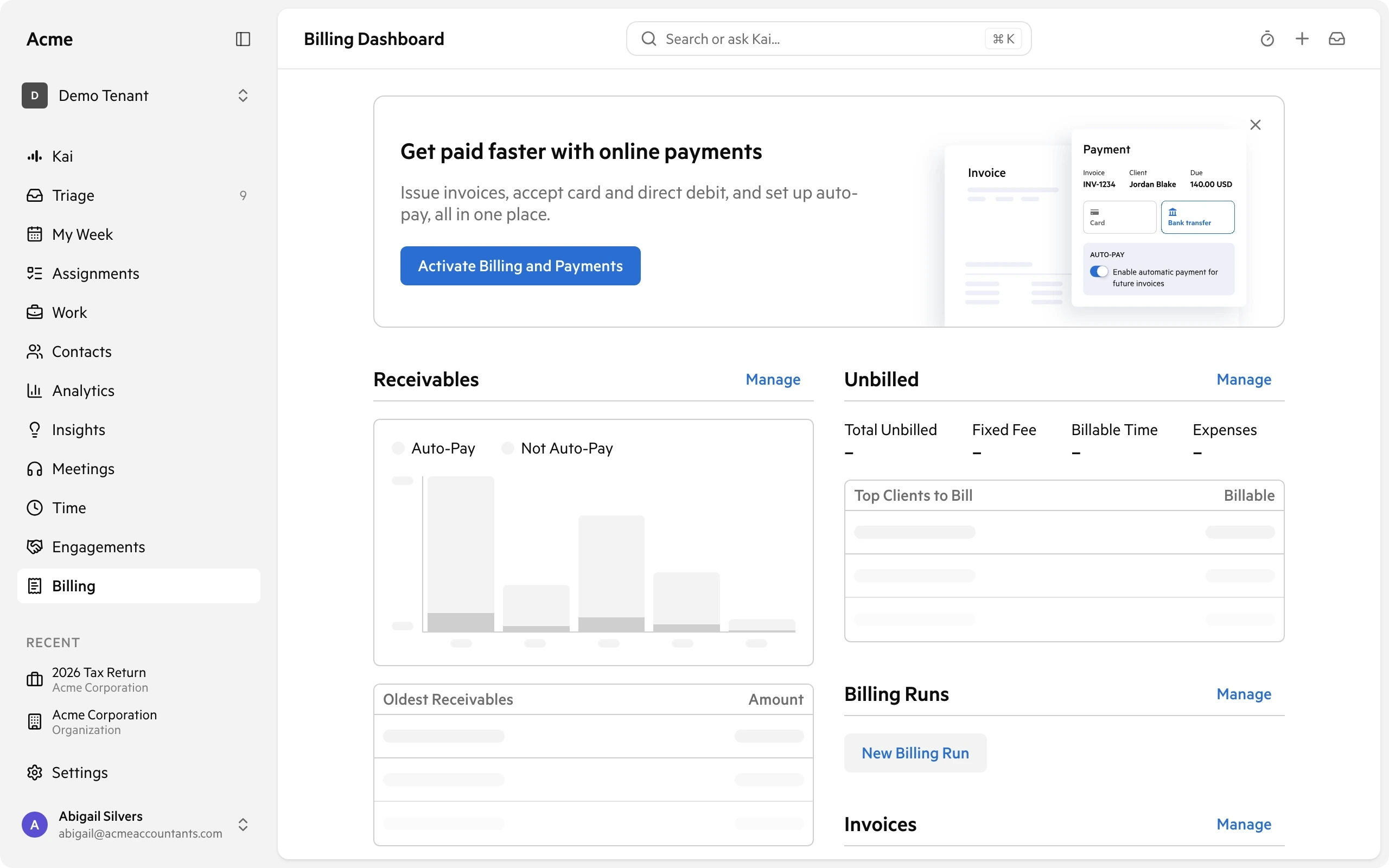
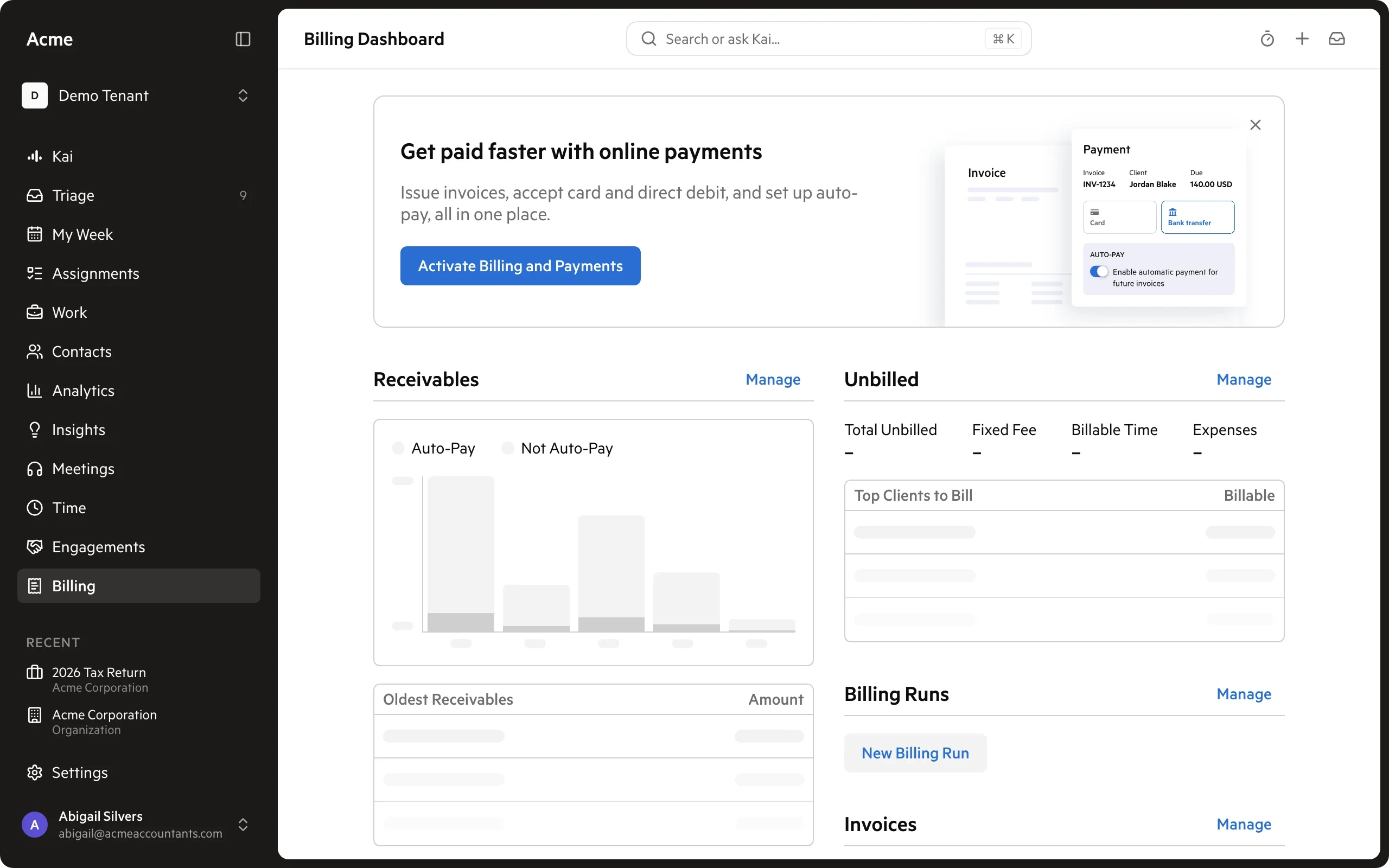
A big part of that most likely came from the redesign. The banner on the billing dashboard helped more firms find the payment setup. The invoice preview made it easier to send a first invoice their client could pay.
Credits
- Engineering
- Theodore Nguyen
- Design
- Venla Inkari
- Lead designer, engagements to payments
- Hannah Faesenkloet